
Ever wondered how Flow actually works?
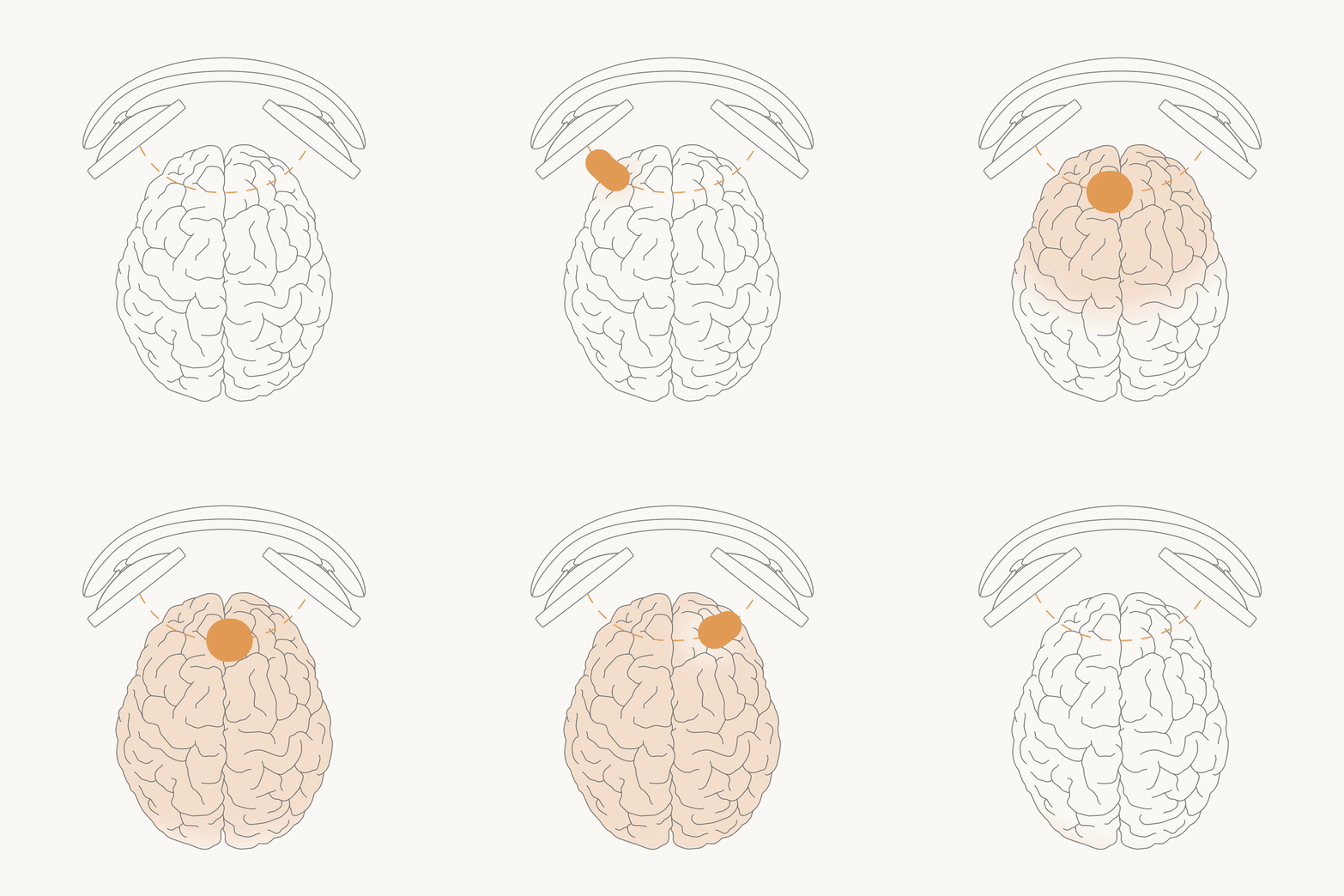
Flow sends a gentle electrical current (tDCS) to the prefrontal cortex — the part of the brain that regulates mood — helping it rebuild the healthy patterns depression slows down. Watch the brain light up.
How tDCS changes the brain
-
The starting point
Depression slows the brain
Depression dampens the mood circuits in the prefrontal cortex, making it harder for the brain to regulate how you feel.
-
Gentle activation
A 30-minute session
A weak electrical current passes through the scalp to the prefrontal cortex, gently waking up the area linked to mood, sleep, focus and anxiety.
-
New connections
Neurons that fire together, wire together
Repeated stimulation encourages neurons to form stronger, healthier connections — the basis of neuroplasticity.
-
Week 3 · patterns shift
Most people feel the change
As the circuits strengthen, the brain rebuilds the patterns it needs. By week 3, most people notice a real difference.
-
The change stays
The new wiring lasts
The rewiring built over a course of treatment holds — so the benefits continue beyond your sessions.
Three parts, working together
No medication, no clinic visits — 30 minutes a day, from home.
The headset
Uses gentle electrical stimulation — transcranial direct current stimulation (tDCS) — to activate the part of your brain that regulates mood.
The app
Guides you through each 30-minute session, with behavioural-therapy exercises drawn from clinical research.
The check-ins
Weekly check-ins using clinical depression scales track your progress and adapt the treatment to you.
Depression changes how your brain works. Flow helps change it back.
Depression isn't just a chemical imbalance — it's a shift in how your brain functions. Flow uses gentle electrical stimulation (tDCS) to target the part of the brain linked to mood.
Neuroplasticity — the brain's ability to rewire itself — is one of the best-established principles in modern neuroscience.
Over time, your brain rebuilds the healthy patterns it needs.
What the data shows
report a clear improvement by week 3
Flow real-world data (n=14,383, Apr 2025)
reached full remission by week 10 in our clinical trial
Woodham, R.D. et al. Nat Med (2024), RCT n=174
experience no side effects at all
Flow real-world data
years of tDCS research behind the method
20+ clinical trials
Backed by 20+ years of tDCS research
The method behind Flow isn't new — transcranial direct current stimulation has been studied for over two decades across more than 20 clinical trials.
It's now used by the NHS to treat depression, where around 80% of patients reported a decrease in their depressive symptoms.
Flow
Is it right for you?
Take a 2-minute quiz to find out if Flow could help with your symptoms of depression.
Take the quiz → Flow Neuroscience